2026 Mixed-media Installation
Realized for the solo exhibition LOOP at SPOR KLÜBÜ, Berlin 2026
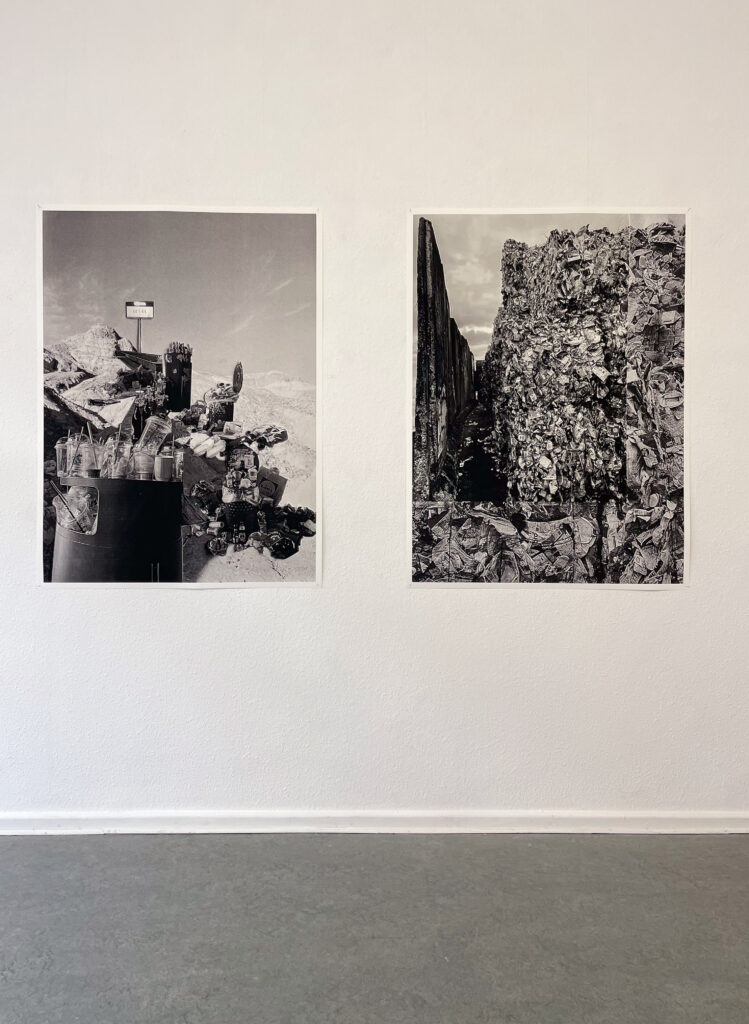
Irina Novarese deals with narrations – stories by and about people in search of a core. In the exhibition „LOOP,“ she examines the often downplayed and neglected topic of waste production. Starting from found objects and situations captured photographically, she created collaged printed works as well as mixed-media installations. She stages these as part of a personal compilation, including as a sound poem, among other forms. (Matthias Mayer)
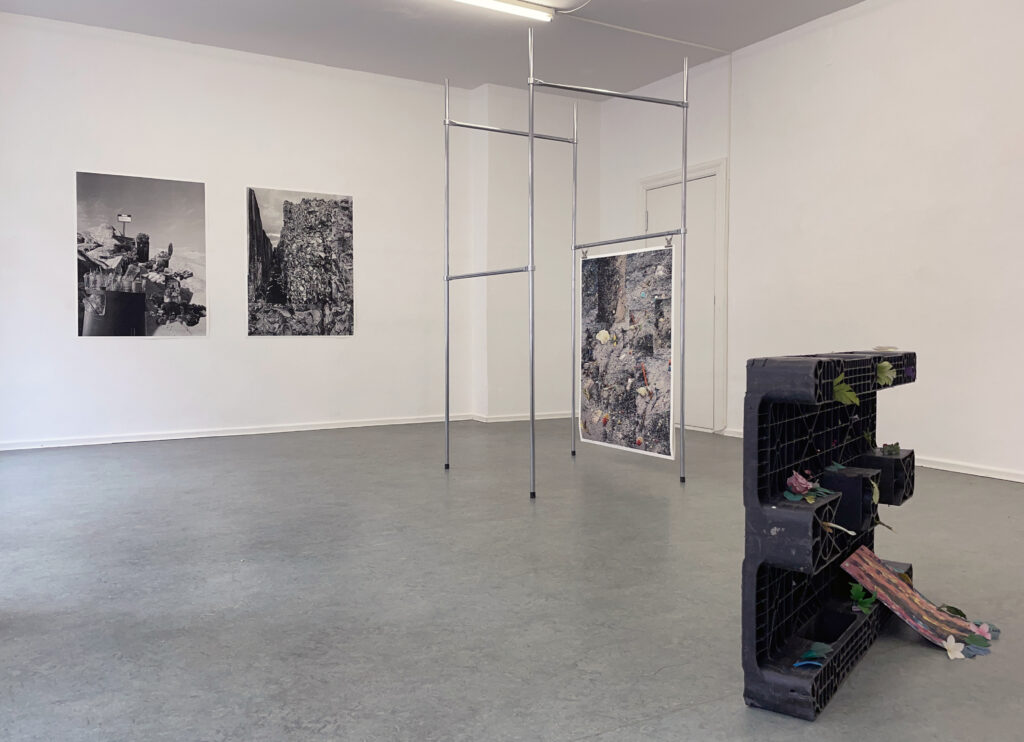
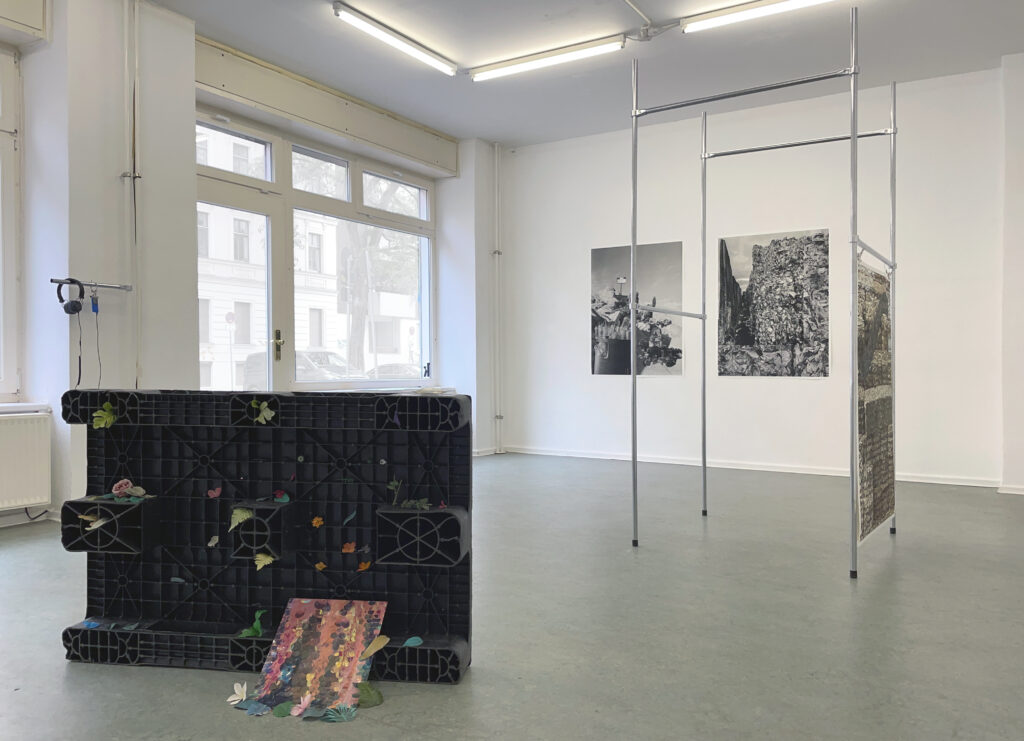
2026 – Fine art print on Hanemühle photo matte – 125 x 94 cm – 1/1
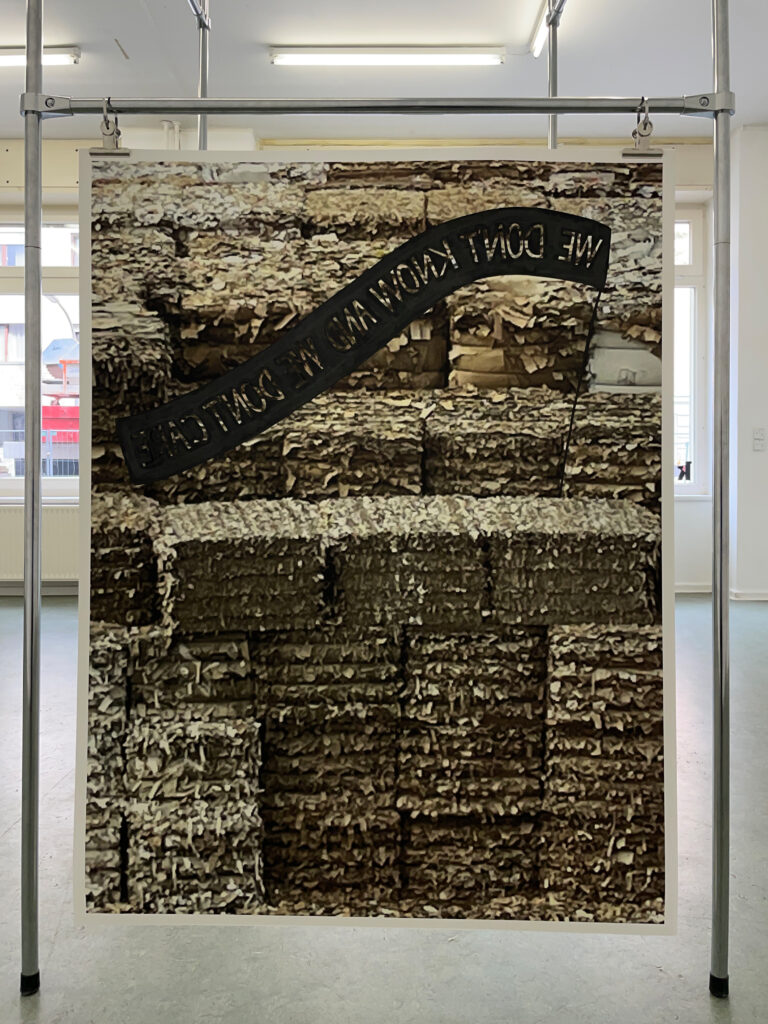
2026 – Fine art print on Hanemühle photo matte – 125 x 94 cm – 1/1
KULTURLANDSCHAFTEN ODER SO?
2026 – Fine art print on Hanemühle photo matte – 125 x 94 cm – 1/1
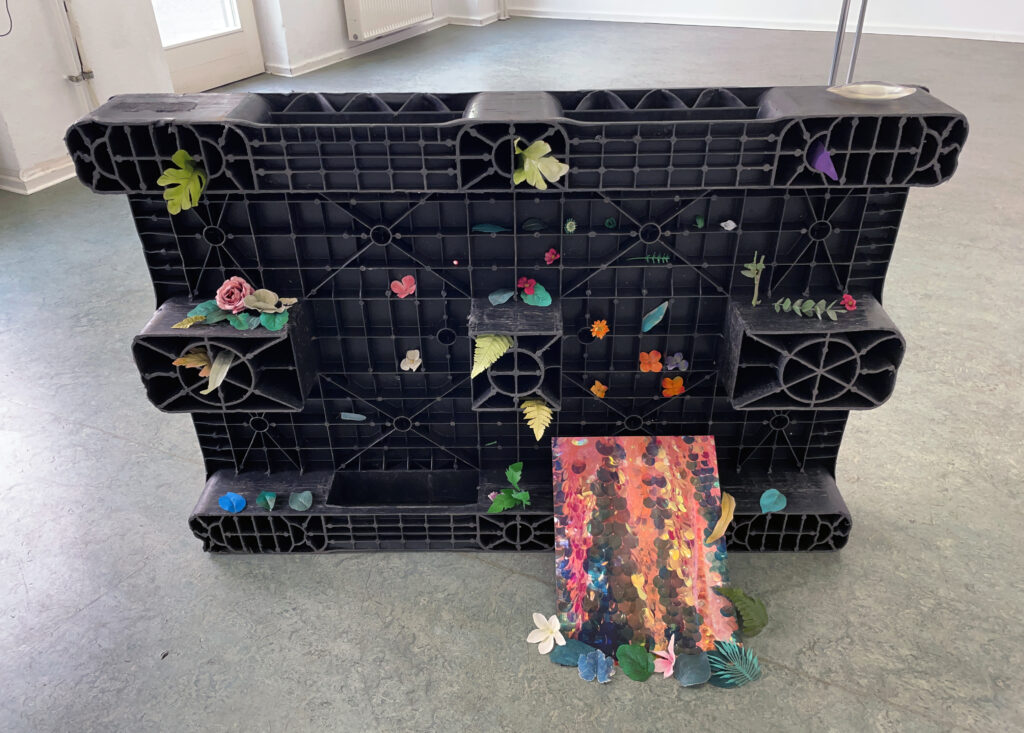
2026 – Mixed media installation
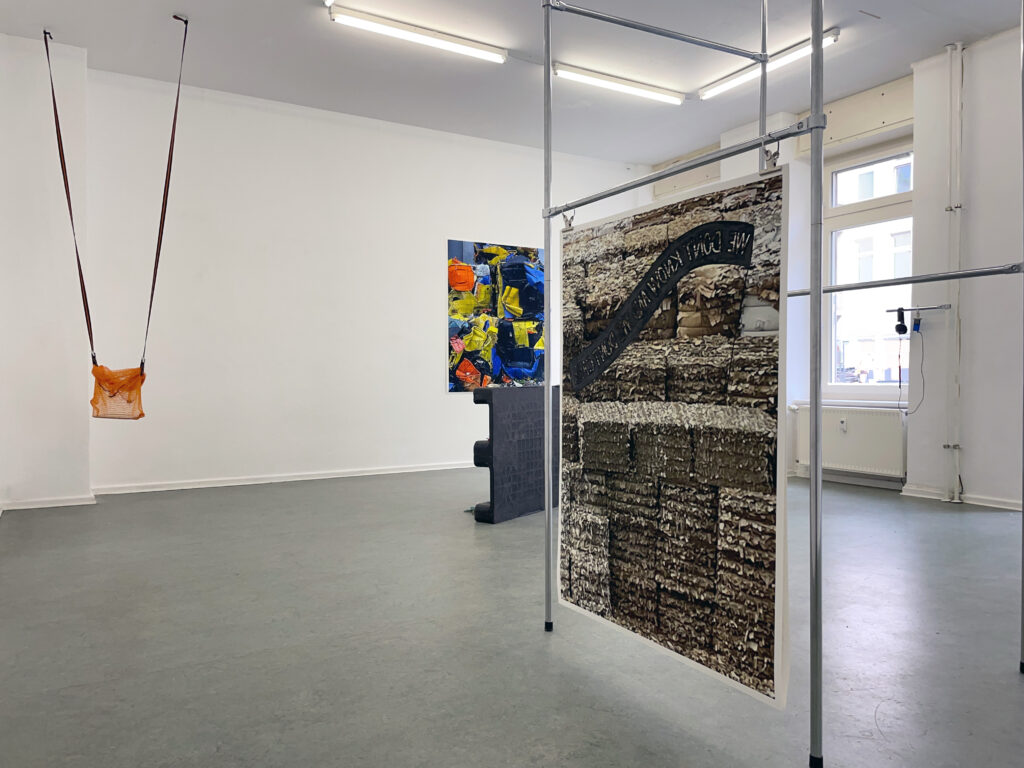
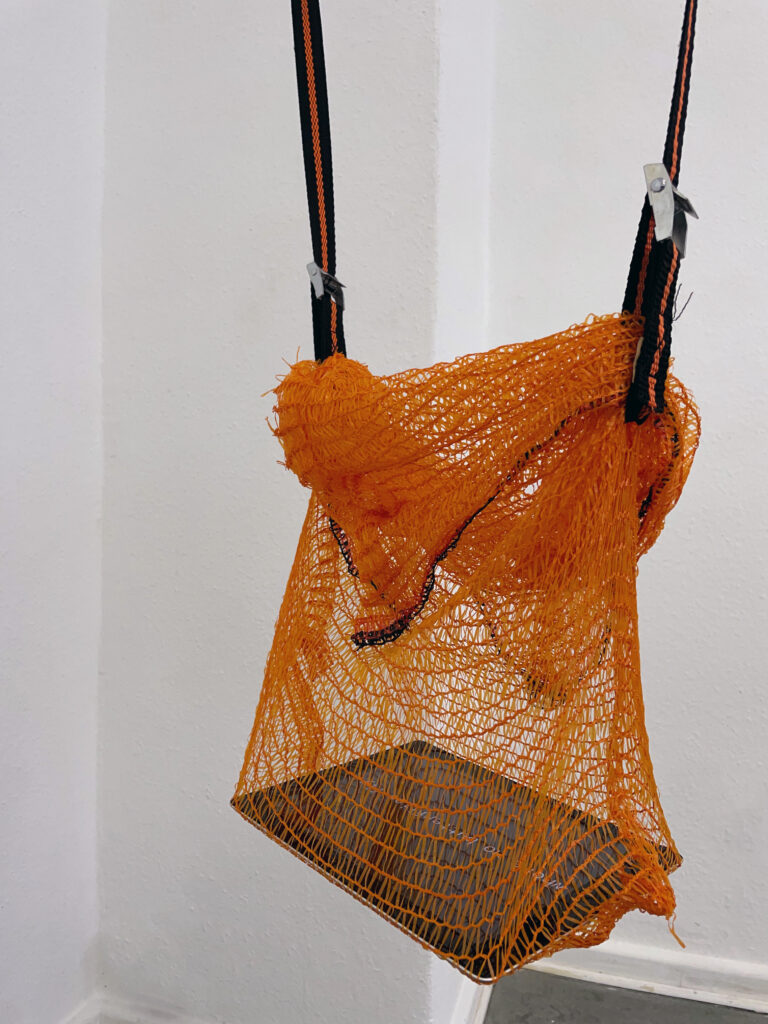
2026 – Video Installation – Video 03’00
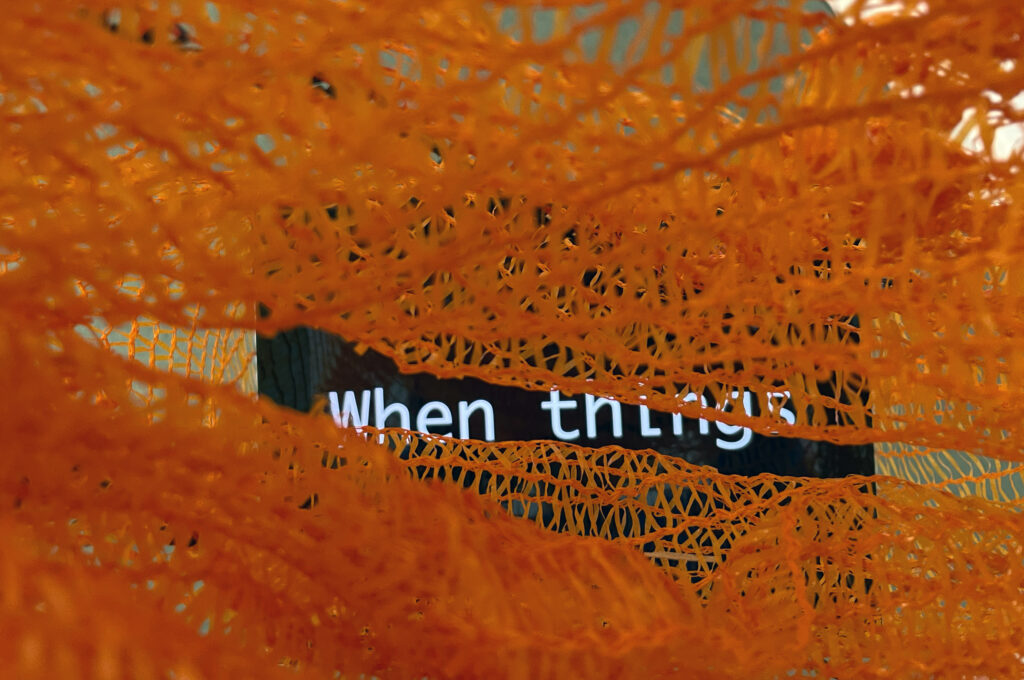
2026 – Video Installation – Video 03’00
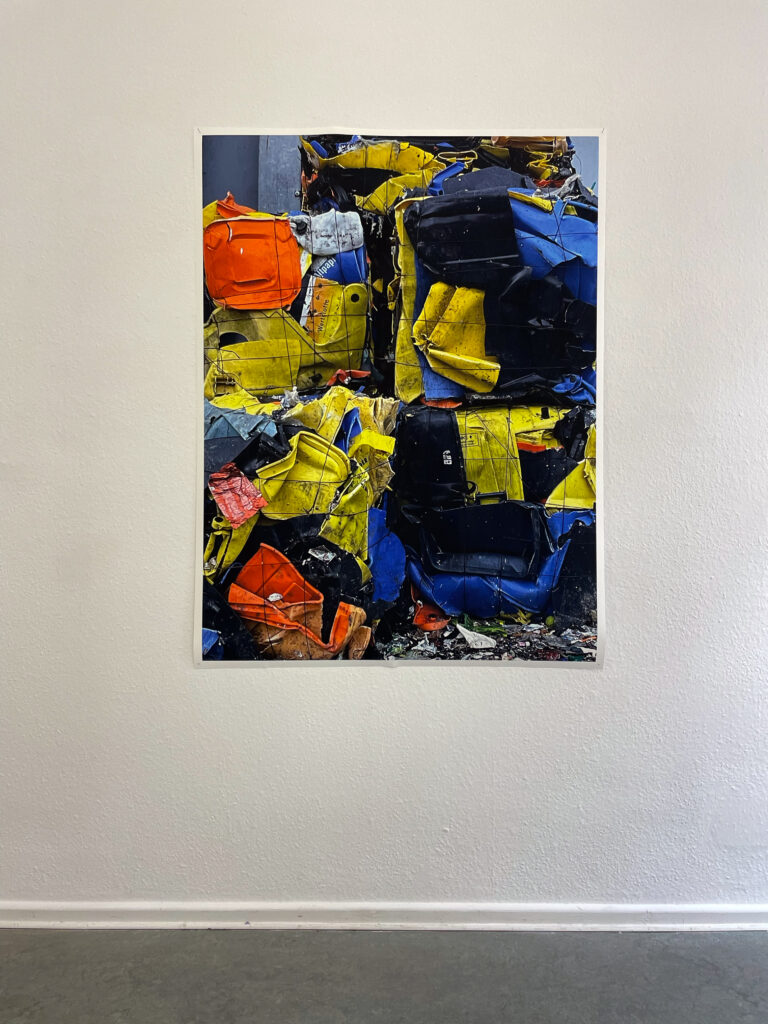
2026 – Fine art print on Hanemühle – Act I
Like everyone else, I throw something away every day. Nothing new. Like everyone else, I see trash every day. On the ground, piled up haphazardly by the elements. Arranged and scattered by someone. In pictures on the internet, in documentaries I watch, and in newspapers—words that report on it. And all the stories that mention it share a dramatic tone, rhetorical phrases about what we could and should do better, about how we should care for the environment around us. Not least because we’ve always produced waste, we’re quite behind schedule.
The difference lies in its material quality, in the unstoppable volume, and in where it can already be found.
I am fascinated by this matter/mass: constantly visible, intense, somehow violent. It is everywhere— beneath, above, and beside my field of vision. I cannot help but imagine and invent stories about it. It is a constantly growing archive about people.
As an archive, it ties in with my earlier work, in which I collected and reassembled information to create my own narrative about identities, places, and spheres. The work of an artist also involves a large production of waste, remnants, and materials. Some of it is thrown away immediately; other parts are used and perhaps reused. But even here, waste is always present.
I am intrigued by the aesthetics of the “discarded,” the accumulation of various materials, and the chronic dependence on them. After all, many artists are also hoarders, and I am no exception. We love the objects and materials we collect, rearrange, and translate into new forms and meanings. Collecting is life-saving. For many people, it is.